
5+
Years Of Experience
Retaining Walls That Handle Slope and Drainage
Hardscaping & Structural Features in Severance for properties with elevation changes and erosion concerns
Retaining walls, walkways, and raised berms provide functional solutions for properties where uneven terrain limits usability or creates drainage problems. Just-In Time Landscapi installs hardscape elements that manage elevation changes, improve flow throughout outdoor spaces, and add structural dimension to flat or sloped landscapes. These installations support long-term erosion control while creating defined zones for plantings, seating, or access routes that work with the property's existing grade rather than requiring extensive regrading.
Installation begins with evaluating grade, soil stability, and drainage patterns to determine wall height, material selection, and footer requirements. Proper base preparation ensures the structure remains stable through freeze-thaw cycles, and backfill drainage prevents water pressure from building behind retaining walls. Walkways are graded to direct runoff away from structures, and materials are selected to match the property's style while handling foot traffic and weather exposure.
Request a detailed estimate based on your property's slope, soil conditions, and intended use of the hardscape elements.
What Changes After Hardscaping Is Finished
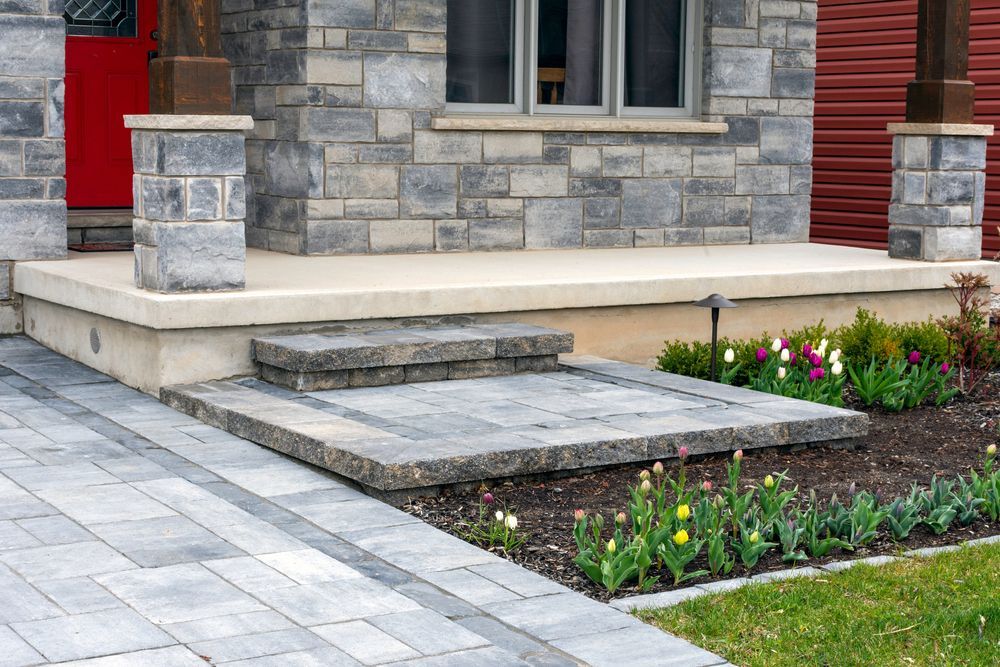
Retaining walls stabilize slopes and create level planting areas or terraces where uneven ground previously limited landscaping options. Pathways and walkways establish clear routes through the property, reducing wear patterns in turf and preventing soil compaction in high-traffic zones. Raised berms add vertical interest to flat landscapes and improve drainage by redirecting water flow away from structures or low-lying areas.
Once the installation is complete, you'll notice that previously eroding slopes are held in place, water drains more predictably during storms, and distinct outdoor zones replace undefined transitions between lawn and garden beds. Retaining walls remain stable without shifting or bulging as long as drainage behind the wall functions correctly, and walkways provide firm, even surfaces that don't sink or become uneven with seasonal ground movement. The structural elements age visibly based on material choice, with stone and concrete developing patina over time while maintaining functional integrity.
These features are built to match the property's layout and support long-term landscape plans, so wall placement considers future plantings, irrigation needs, and access for maintenance equipment. Material choice affects appearance, cost, and durability, with options ranging from natural stone to modular block systems depending on aesthetic preferences and structural requirements. Drainage behind retaining walls must be maintained to prevent hydrostatic pressure from compromising stability, especially in areas where clay soils retain moisture.
Answers to Frequent Hardscape Questions
Hardscape projects in Severance address practical concerns about material selection, drainage management, and how structural features hold up in northern Colorado's climate.
What determines the height of a retaining wall?
Wall height depends on the slope being retained, soil type, and whether the wall will support additional load from plantings or structures above it, with taller walls requiring engineered footers and reinforcement.
How do walkways prevent settling or cracking?
Proper base preparation with compacted gravel and sand creates a stable foundation that resists movement from freeze-thaw cycles, and joints between pavers or stones allow for minor shifts without surface cracking.
Why are raised berms used in flat landscapes?
Berms add elevation changes that improve drainage, create visual interest, and allow for layered plantings that wouldn't be possible on level ground, enhancing the overall depth and character of the landscape.
What happens if drainage behind a retaining wall fails?
Water pressure builds up behind the wall, leading to bulging, cracking, or complete structural failure, which is why weep holes, gravel backfill, and proper grading are critical during installation in Severance's clay-heavy soils.
How long does hardscaping take to install?
Timeline depends on project scope, material availability, and weather conditions, but most walkway and retaining wall installations are completed within a week once materials are on-site and ground conditions allow excavation.
Just-In Time Landscapi builds hardscape features that improve property function and support long-term landscape plans. Schedule a site evaluation to review slope, drainage, and material options suited to your property's conditions.